Thursday, 16 January 2014

HA2 - Task 2 Artistic Styles

Photorealism:

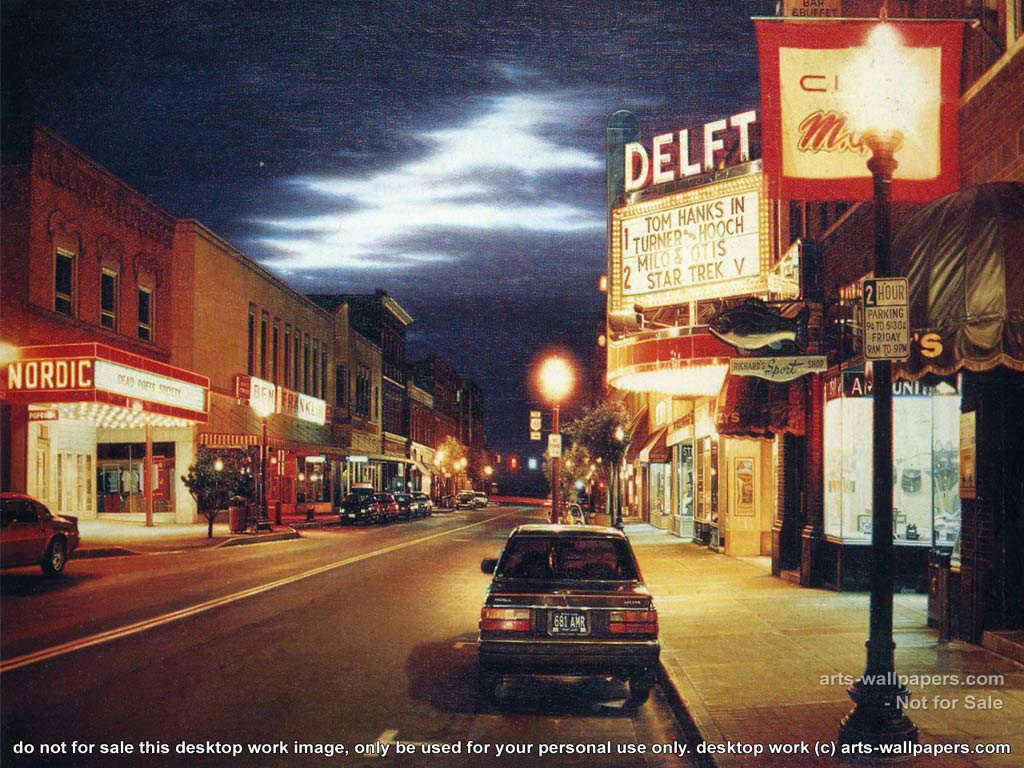
Photo-realism, also called Super-realism,  American art movement that began in the 1960s, taking photography as its inspiration. Photo-realist painters created highly illusionistic images that referred not to nature but to the reproduced image. Artists such as Richard Estes, Ralph Goings, Audrey Flack, Robert Bechtle, and Chuck Close attempted to reproduce what the camera could record. Several sculptors, including the Americans Duane Hanson and John De Andrea, were also associated with this movement. Like the painters, who relied on photographs, the sculptors cast from live models and thereby achieved a simulated reality.
This is an example of photorealism.

http://wololo.net/wagic/wp-content/uploads/2013/06/photorealism.jpg

Cell Shading:

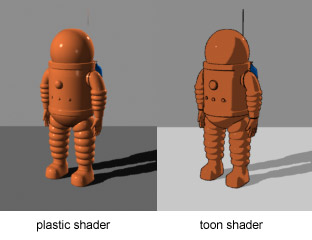
Cel shading (often misspelled as 'cell shading') or toon shading is a type of non-photorealistic rendering designed to make 3-D computer graphics appear to be flat. Cel-shading is often used to mimic the style of a comic book or cartoon. It is somewhat recent, appearing from around the beginning of the twenty-first century. The name comes from cels (short for celluloid), the clear sheets of acetate which are painted on for use in traditional 2D animation.


Abstraction:

Abstract art style employs lines and geometric shapes that are not meant to resemble anything in particular. Geometry Wars and Breakout are two well-known examples.

Early game developers often chose abstract visuals, because real objects could only be crudely translated into game graphics at the time; this was especially true prior to the release of the NES, on consoles such as the Atari 2600. Some games were given context in the manual or marketing that the game alone could not convey, such as Yars' Revenge or Raiders of the Lost Ark. Without this external context, both games would be considered graphically abstract. With it, however, they must be seen as heavily stylized or primitive.


Exaggeration:

Several video games elicit childlike and playful experiences that involve exaggerated movements and expressions. Various exaggerated features such as character movements, expressions and actions, provide viewers and players senses of comedy, possibility and nostalgia. These exaggerations reflect elements of expressionism, theatre acting and animation and are readapted into the game culture, which exemplify Sergei Eisenstein ‘s notion of Plasmaticness, the freedom to assume any form; freedom from ossification.

Video games such as Wario Ware and Rayman Raving Rabbids exemplify cute caricatures with exaggerated expressions and actions and engage players’ participation and movements. For example, the rabbits in Rayman Raving Rabbids all posses abnormally large mouths with two big front teeth and also exhibit childlike expressions of naivety and mischievousness. When the player character is in direct or indirect physical contact with the rabbits, they scream in an adorable way that produces giggles and laughter in users and viewers.  These sound effects and movements encourage players to continue their actions that induce these sounds. Not only the expressions, but also the actions that are asked of the players to act on the characters are also exaggerated. In Wario Ware, for example, players are often asked to do some exaggerated movements to get the characters on the screen to do the same movements: whether it is the speed with which someone run or dramatic waves that fan the monster away. These movements create a sense of limitlessness in which everything seems to be possible.

Monday, 13 January 2014

HA2 - Task 3 Graphic Types

Create a report that explores these five different types of computer game graphics:

PIXEL ART
CONCEPT ART
TEXTURE ART
BACKGROUND GRAPHICS
PRINT MEDIA ART

Choose a wide range of examples and remember that you are trying to describe and explain your findings. Illustrate as required and remember to cite any sources you have used in your research, both written and visual.

Pixel Art:

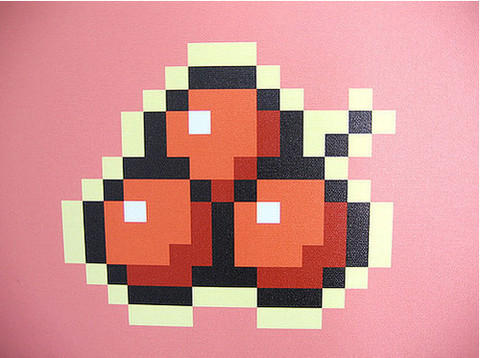
Pixel art is the creation of digital art, pixel by pixel. A pixel is a digital screen element in shape of a square, and creating pixel art means that you make bitmap illustrations, placing every pixel by hand.

In modern digital art a lot is often generated by computers. Computers automatically add new colors, smoothing things out or even generate whole image parts. In pixel art, you have full control, and thereby it is possible to deliver digital works of higher quality. However, it is a lot more time consuming, in that way that it is hardly ever worth it. Therefor pixel art is mostly made by hobbyists nowadays.

Pixel art generally uses under 256 colors, while modern screens can display up to 4.2 billion distinct colors.


Concept Art:

Concept Art usually represents the art in the development process of games or movies, in which will ultimately define the final look before going for final production. Therefore, concept art takes place in what the industry is calling, pre-production phase. This phase, is also the initial investment for the production, is to ensure the direction and plan is solidify before entering the next phase of investment. In any case the pre-production is deemed not projecting to where the producer or director is going, the project may be cancelled or re-evaluate.

To clear some misconception about concept art, a good piece of concept art doesn’t necessarily need to be a nice illustration. Concept art consists of two major elements, the ‘concept’ in which the idea or back-story of specific subject that might relates to the world of the story. And the ‘art’, which depicts the ‘concept’ with aesthetic design that will appeal to the production’s target audience, however still maintaining and supporting its underlying ‘concept’. Therefore, good concept art is when both ‘concept’ and ‘art’ can provide the highest entertainment value to the final production.


A texture artist is an individual who develops textures for digital media, usually for video games, movies, web sites and television shows.These textures can be in the form of 2d or (rarely) 3d art that may be overlaid onto a polygon mesh to create a realistic 3D model.
Texture artists often take advantage of web sites for the purposes of marketing their art and self-promotion of their skills with the goal of gaining employment from a professional game studio or to join a team working on a "mod" (modification) of an existing game in hopes of establishing industry or trade credentials .


Background Graphics:

The background graphics are used in most games but are used differently. In 2D games the background is usually one graphic that cannot be moved or needs any animation. But in 3D games graphics are usually on objects that can be interacted with.


Print Media Art:

Print media art is important to games, this is because, a lot of people are attracted by colourful art designs for games, whilst others think they look cool or awesome, this is the same with posters,packaging etc.First lets start with game packaging, game packing, lets admit it, is really cool, but only the better editions of games now come with packaging recently. An example of this is "borderlands 2: loot chest edition" and the "borderlands 2" game next to each other. 

HA3 - Task 7 Review

Review:


I was impressed with my work considering the amount of time I had available. If I had more time I feel as if my works quality would be much better. My artwork (in my opinion) is really good, however I feel that I could have been a lot better. Once I had finished the artwork I felt that it was too dark and that making the decision to have my character showing no facial features and emotions was the wrong decision, because I wanted to portray that both game and character was dark.

I read each task carefully and thoroughly, making sure that I always stayed within the tasks parameters. With some exceptions. For the most part I understood how the unit was structured and worded, sometimes I would struggle to understand but after a while I'd figure it out. I feel that I could of utilised moodle more for help with my work but I was so into it I forgot all about the fact that moodle had things there to help me out. When I first found out about the time scale of the project I thought it would be more than enough time to get everything done to a ultra awesome mega high standard. But, as I worked my way through I discovered that the time scale might not be enough so I had to work myself harder and harder until I finally finished it. I feel that if the time scale was longer or didn't exist work would be 10x better than it is now.

HA3 - Task 6 Presentation

HA3 - Task 5 Production


Forbidden Realm:


VERSION 2


HA3 - Task 4 Planning


HA3 - Task 3 Character Profile


Character profile: